What Igalo is
Igalo is a small coastal district at the western edge of Herceg Novi, roughly 3 km from the old town. It looks, at first glance, like any quiet Adriatic resort, a long pebble beach, a flat promenade, Yugoslav-era hotels behind pine trees. What sets it apart is what is underneath: a shallow bay where the seabed is lined with a fine, dark, mineral-rich mud known locally as igaljsko blato or peloid, and a coastal spring producing sulphur-heavy mineral water. These two natural resources are the basis of everything Igalo has built since the 1940s.
The Institute "Dr Simo Milosevic" opened here in 1949 and quickly became one of the flagship rehabilitation centres of the Yugoslav state. Josip Broz Tito was a regular patient and had a dedicated villa on the grounds (Villa Galeb, now part of the complex). Patients arrived then, and to a degree still arrive today, on referral for rheumatic conditions, post-stroke rehabilitation, and musculoskeletal recovery. Cures typically run 14 or 21 days and are covered by several European health insurance systems.
The Institute, day visits, and what "a treatment" means
The Institute runs a large outpatient programme alongside its residential cures. If you are passing through and curious, you can book individual treatments: a peloid mud wrap, an underwater massage, a sulphur-water bath, thalassotherapy. A single treatment typically runs EUR 15-35 depending on complexity, and you walk out three hours later feeling somewhere between relaxed and faintly medicinal. Book at the reception in the main block; English is spoken.
This is a clinical spa, not a resort spa. The staff wear white coats, the corridors are long and linoleum-floored, and the whole thing has a distinctly functional Yugoslav aesthetic that has been mildly updated but never erased. If you are expecting scented candles and eucalyptus you will be in the wrong building. If you are curious about European social-medicine architecture, you will find it fascinating.
The mud itself
Igaljsko blato is classified as a peloid, a mineral-rich marine sediment. It is scraped seasonally from a defined section of seabed in the bay, matured, and then used in treatment wraps. The Institute publishes analysis showing high levels of sulphur, iodine and various trace minerals, and cites clinical studies on effects in rheumatic and inflammatory conditions. Claims about therapeutic effect should be read alongside the usual caveats for balneotherapy, the evidence base for some applications is reasonable, for others more limited. What is not in doubt is that a 40-minute mud wrap followed by a sulphur-water shower is a memorable physical experience.
The promenade and the beach
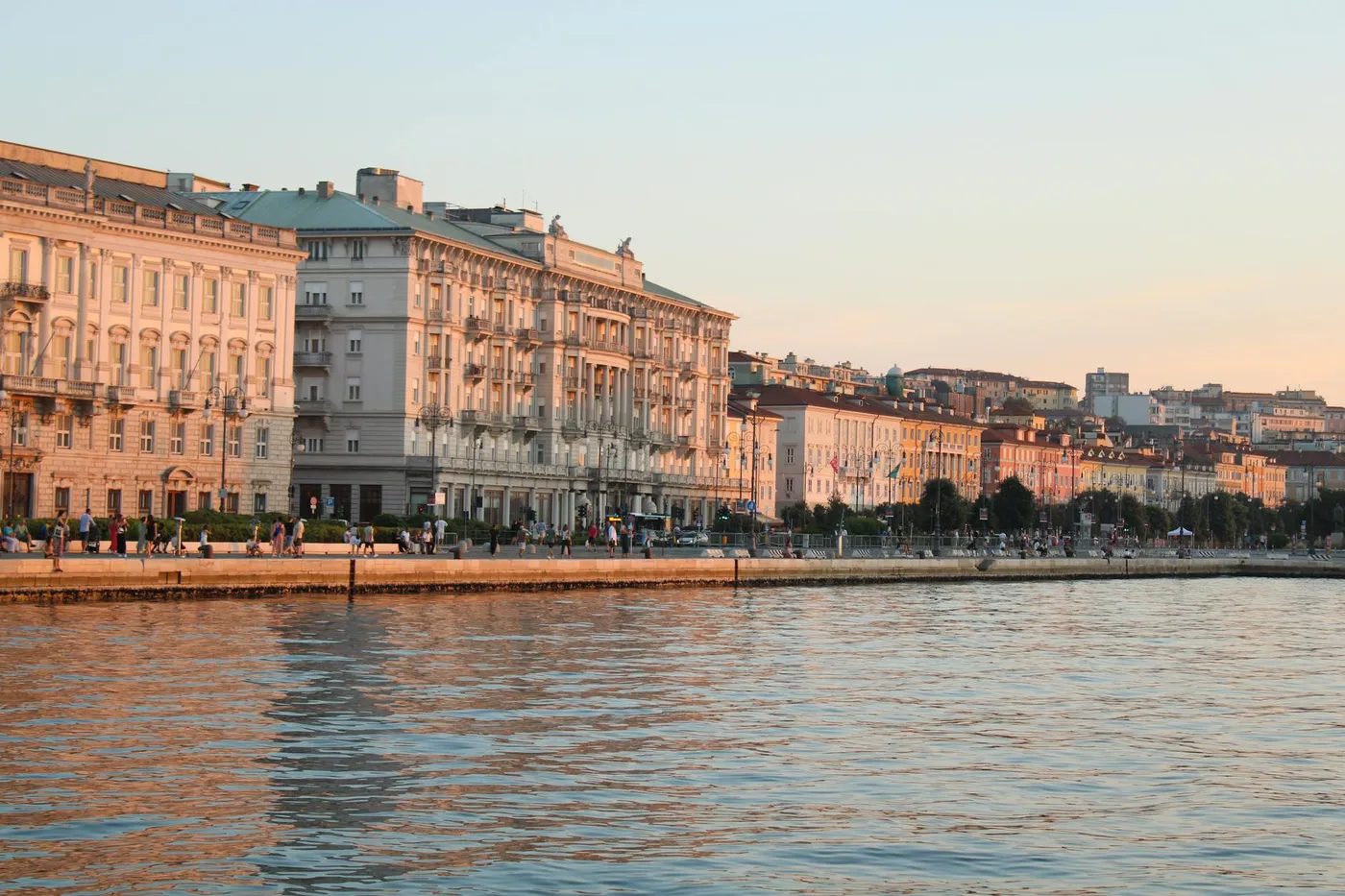
Pet Danica is the long seafront promenade connecting Igalo to Herceg Novi, roughly 7 km in total, flat, broad, paved, and lined with cafes and benches. The Igalo end has several pebble beaches, a small harbour, and a pine park that provides the only real shade on hot days. The water here is calm and shallow, which partly explains why the district developed as a health resort in the first place, it was manageable for older and less mobile patients.
For a coffee stop with a view, any of the terrace cafes along the western half of the promenade work. The eastern end, approaching Herceg Novi's harbour, gets busier in high season.
Events and timing
Igalo shares much of its cultural calendar with Herceg Novi. The Mimosa Festival in February centres on the old town but Igalo is a staging area and beneficiary, with its own concerts and displays. Summer brings film nights and open-air concerts in the Institute grounds. Winter is quiet, many hotels close, the promenade empties, and the spa turns its full attention to its residential patients.
Driving and parking
From Herceg Novi old town, Igalo is 3 km west along the main coastal road (M-2). There is a small roundabout where the Sutorina inland road turns off; stay on the coast. Free parking is available along the western end of the promenade and near the old railway line (the line itself has been lifted, only the trackbed remains, now a walking path). Paid parking near the Institute is cheap but limited in summer.
If you are coming from Tivat airport, factor in around 45 minutes through the bay road, plus time for the Kamenari car ferry across the Verige strait (EUR 4.50 for a standard car in 2025). After the ferry the road to Igalo is straightforward.
Practical tips
- Book treatments ahead: Individual treatments can usually be arranged day-of but in July-August it is worth calling the Institute a day or two in advance.
- Bring your own towel and flip-flops: Supplied at residential cures, not always for day visits.
- Health insurance: If you are an EU resident considering a cure, check with your insurer, several national systems reimburse Igalo programmes.
- Language: English and Russian are widely spoken among the medical staff. German is common.
- Nearby: Combine a day visit with the walk up through Herceg Novi's staircases, flat promenade one way, stairs the other.