What Mamula is
Mamula, properly Lastavica, though almost nobody uses the official name, is a small circular island at the mouth of the Bay of Kotor, roughly 200 metres across, sitting between the Lustica peninsula to the east and the Croatian Prevlaka peninsula to the west. What makes it instantly recognisable is the fortress that fills almost the entire island: a circular Austro-Hungarian sea-fort built in 1853 under the direction of General Lazar Mamula (hence the popular name), designed to close the bay to hostile shipping. The design is pure mid-19th-century coastal fortification, massive limestone walls, embrasures for heavy guns on two levels, a central courtyard, and a cistern system to allow the garrison to hold out for months.
The fortress's darkest chapter is from the Second World War. During the Italian occupation of Montenegro (1941-43) it was used as a concentration camp, primarily for civilian internees from the surrounding region. Several hundred people died there. A memorial plaque on the island records this, and any serious visit should acknowledge it.
The 2023 hotel and what changed for visitors
In 2023 the fortress was reopened after a decade-long restoration as a luxury hotel operated by a private investor group. The conversion was controversial, local war-survivor associations objected to a Second World War internment site becoming a five-star resort, and the debate has continued through Montenegrin media. What this means practically for a day visitor: the island is no longer freely walkable. Parts of the fortress are now hotel grounds accessible only to guests. Day visitors on boat tours typically dock at the outer jetty and can visit a designated public area including the memorial, but full exploration of the courtyards and casemates as was possible a decade ago is no longer the experience on offer.
Check the current access arrangements when you book. They have changed more than once since the hotel opened, and the situation is still somewhat fluid.
How to get there
There is no scheduled passenger ferry. Access is by small tourist boat from three main departure points:
- Herceg Novi harbour (Skver): Half-day trips combining Mamula with the Blue Cave at Lustica. Roughly 35-40 minutes each way.
- Zanjice beach, Lustica peninsula: The closest launch point. Small boats run on demand in season, 10-15 minutes to the island.
- Rose village, Lustica peninsula: A slightly longer crossing, often part of a bay-mouth tour.
Prices in 2025 were roughly EUR 25-35 per person for a shared half-day Blue Cave plus Mamula circuit from Herceg Novi, including the short stop at the island. Private charters run higher. Sea state matters: in strong southerly winds the crossing can be rough and operators will cancel or reroute.
Driving to Zanjice
If you want the shortest boat crossing, drive to Zanjice beach at the western end of the Lustica peninsula. From Herceg Novi, that is a 25-30 km drive: across the Kamenari-Lepetane ferry (EUR 4.50 for a standard car) and then along the Lustica road to its western tip. Allow 60-75 minutes including the short ferry wait. The final kilometre into Zanjice is a steep narrow descent, any standard rental handles it, but go slow.
The fortress itself, from outside
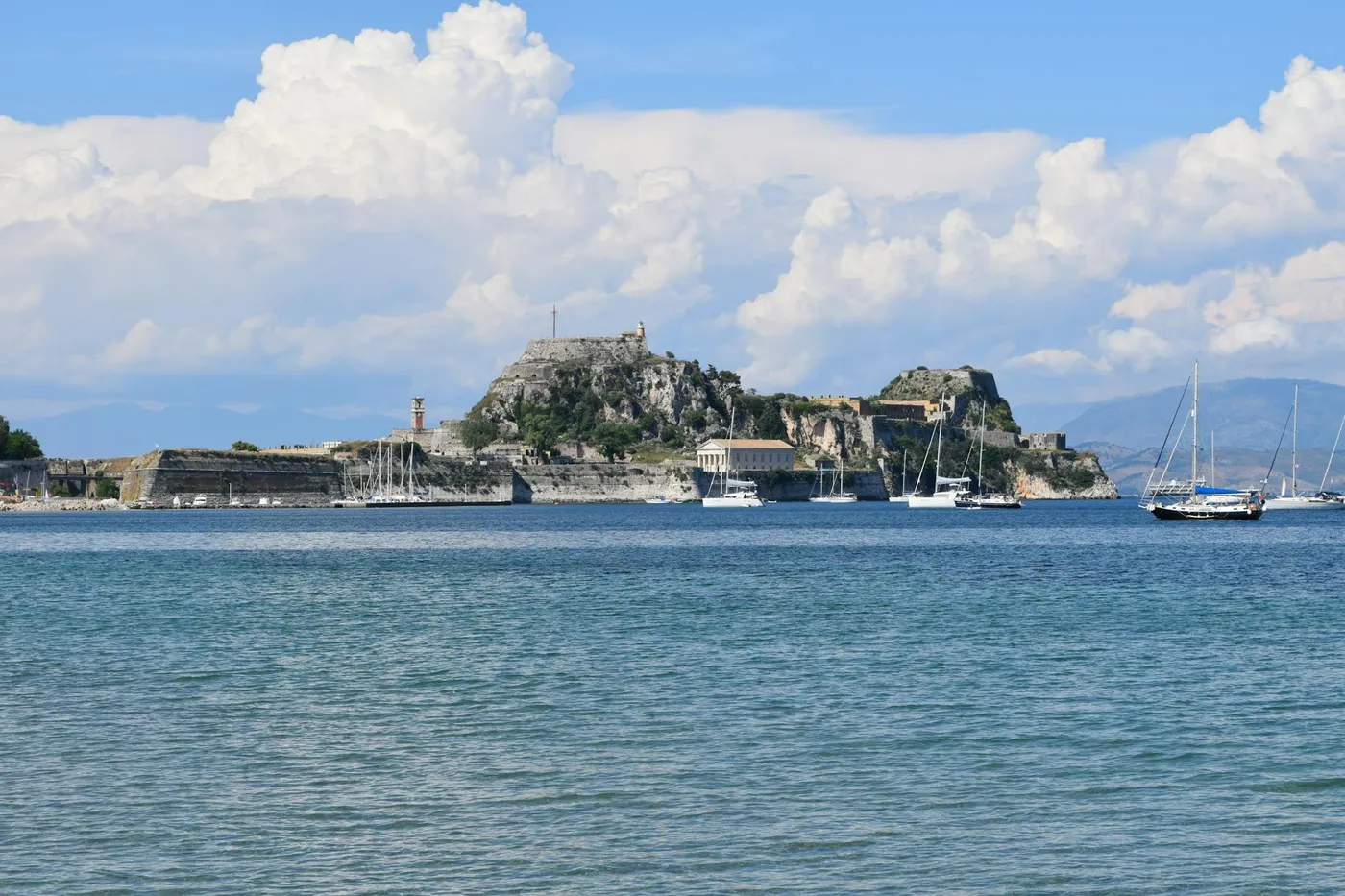
Even without interior access, the approach by boat is the main visual reward. The walls drop sheer into clear water. Swallows (lastavice, the island's real name) nest in the embrasures. On a calm morning the sea inside the lee of the island is an unusual pale green-blue over sand, and many boats stop to let passengers swim before moving on. Bring a swimsuit and reef-safe shoes, the rock edges are sharp.
History in context
Mamula's value was always the geometry of the bay. Paired with the older artillery batteries at Ostra on Prevlaka (Croatia) and Arza on Lustica, it formed a triangular fire-control over the bay mouth. Any hostile ship trying to force the passage would be under fire from three directions at once. The system was never tested in anger, by the time of the First World War artillery had moved on, and Mamula's main military use afterwards was as a detention site. The three-fortress complex ashore in Herceg Novi (see our Forte Mare, Kanli Kula and Spanjola guide) is the older, town-facing counterpart to this sea-ward defence line.
Practical tips
- Time: Morning boats are calmer and less crowded. Afternoon light is better for photos of the western walls.
- Bring: Swimsuit, quick-dry towel, water, hat. Reef shoes if you plan to swim near the rocks.
- Season: May-October for reliable boat service. November-April is weather-dependent and many operators pause.
- Respect the history: The memorial to Second World War victims is prominently signed. Take the minute.
- Combine with: The Blue Cave is almost always part of the same boat circuit, do not book them separately.