Why olives grow this well here
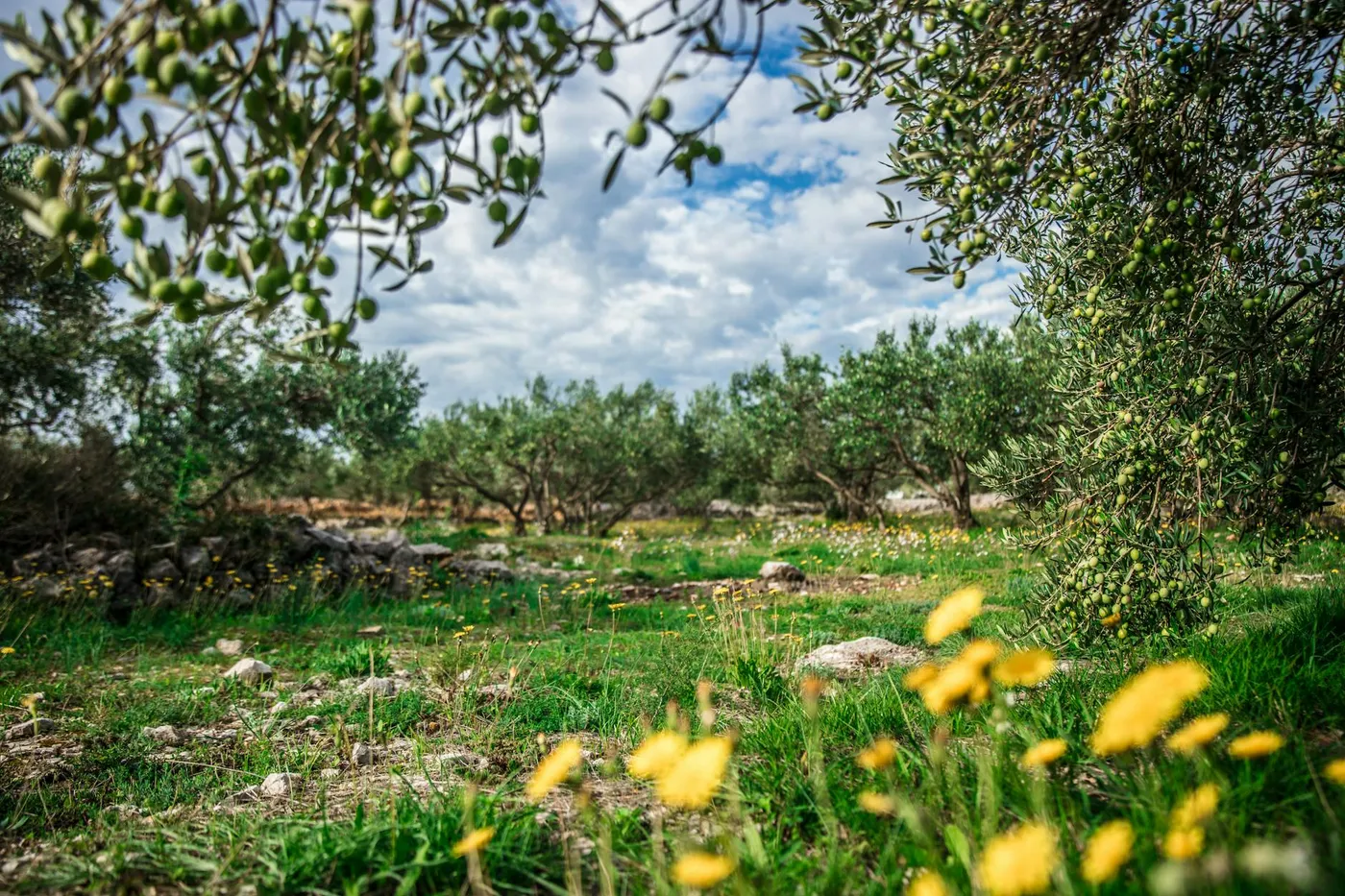
The strip of coast from Igalo up through Sutorina, Mokrine and Ratisevina sits in one of Montenegro's warmest microclimates, low frost risk, long autumn sun, limestone soils and steep terraces that drain fast after winter rain. That is close to ideal for olive. The dominant cultivar along this stretch is Zutica (sometimes written Zutica crnogorska), an oil-producing variety also found around Bar; it tends to produce a medium-bitter, peppery oil with a long finish.
Trees here are old. Individual specimens in the wider Boka and Bar region are recorded at several hundred years, the Stara Maslina near Bar is the famous example and is routinely cited as around two thousand years old, though claims that precise should always be read with a pinch of salt. In the groves behind Herceg Novi you will not see that extreme, but two- and three-hundred-year-old trees are common, knotted and leaning, still producing fruit every other autumn.
The drive up from the coast
Most small producers are reached by turning inland off the main coastal road (M-2 / E-65) between Igalo and Meljine. Two useful starting points: the turn-off for Sutorina (signposted from the Igalo roundabout) and the Ratisevina road that climbs from the eastern edge of town. Both routes narrow quickly to single-lane asphalt with passing places. Expect 10-20 minutes from the promenade to most groves, but drive it in daylight the first time. Blind hairpins and oncoming vans carrying crates in October are part of the experience.
If you are approaching from further up the bay, the easiest sequence is coast road to Herceg Novi, then inland. The same hill roads also link to Savina Monastery via the old backroads, which makes a neat half-day combination.
How the harvest actually works
Picking runs roughly from the second week of October into early December, with the peak in late October and November. Families still pick mostly by hand onto nets laid under the trees, sometimes using small battery-powered rakes to speed up the higher branches. Fruit is bagged and taken to a local mill within 24-48 hours, longer than that and the acidity climbs.
The working mills in the area press on a rolling schedule through the season, so if you visit in late October or November you will often see the stone-crushing or modern centrifuge running. It is worth calling ahead: during peak harvest a mill may be too busy to host walk-ins, while in the quieter shoulder weeks they are glad of visitors.
Arranging a tasting
There is no formal olive-oil trail with bookable tours the way there is in Istria or Tuscany. What there is: smallholders who sell from the gate, a handful of small mills that double as informal tasting rooms, and one or two producers who have started hosting visitors more seriously. Ask at your accommodation or at the Herceg Novi tourist information office on the main square (they keep a list of producers currently open to visitors, which changes year to year).
A typical visit runs 60-90 minutes: a walk through the grove, a look at the press if it is running, and a tasting of the current-season oil alongside last year's for comparison. Expect to pay EUR 15-25 per person if it is a structured visit, or simply to buy a bottle or two (EUR 12-20 for 0.5 litre is a fair range for single-estate oil) if you have been welcomed in informally. Cash is easier than card at the small producers.
What you are actually tasting
Fresh single-estate oil from this coast is grassy and green on the nose, peppery at the back of the throat, that catch in the throat is oleocanthal, a marker of freshness and polyphenol content, not a fault. Local producers will pour a small puddle into a small glass, warm it in the palm, and have you sip rather than dip bread. Bread comes later, usually with last year's oil which has mellowed.
If the oil you are offered tastes flat, waxy or slightly fermented, it is old or poorly stored. Politely move on. Good producers will be open about pressing dates and usually print them on the label.
Practical tips
- Best time: Late October to late November for the harvest in action. July-August is hot and most producers are focused on the coast; spring is green and pleasant but the mills are quiet.
- Book ahead: A message the day before is plenty, most producers do not operate formal booking systems. A local number is the norm.
- Driving: Single-lane hill roads with blind corners. Any standard rental is fine; no 4x4 needed. Fold your mirrors in at some of the narrower village stretches.
- Buying: Bring cash in small notes. A 0.5 L or 1 L bottle of current-season oil is the standard unit. Ask for it to be sealed properly for the flight home, most producers will oblige.
- Combine with: Savina Monastery on the way back down, or lunch at a konoba in Sutorina.
A note on the villages
Mokrine, Krusevice and the scatter of hamlets inland were depopulating for decades as families moved to the coast for tourism work. Olive and a handful of returning wine producers are part of a slow reversal. You will see new terraces being cleared and old stone huts re-roofed. It is not yet a wine-trail economy, but the direction of travel is clear.